


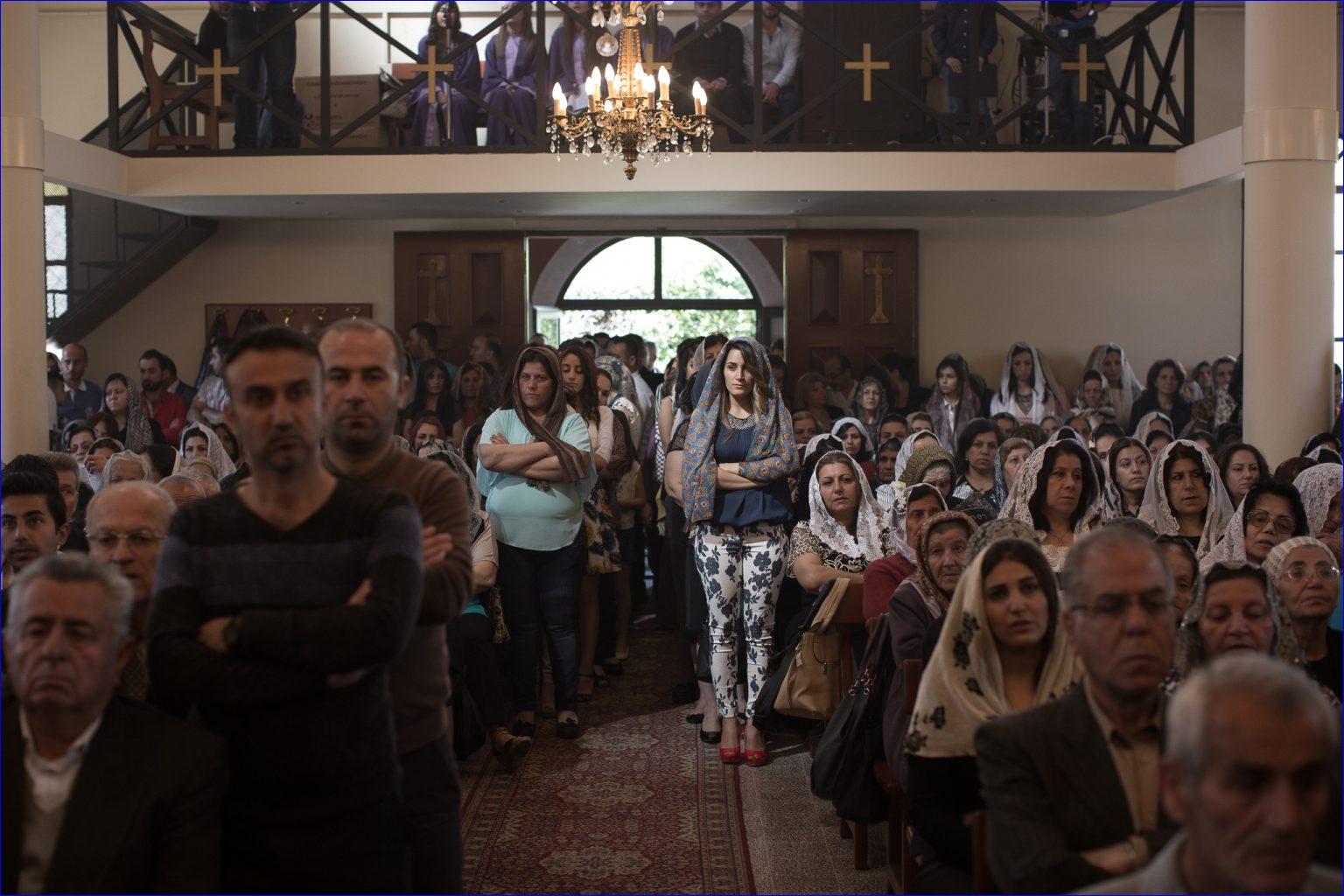
Their two children were arguing over who would use the television first. Somewhere in the distance, a church bell sounded. It was the kind of evening that had repeated itself hundreds of times, so familiar that no one imagined it could disappear overnight.
Related: Timeline of ISIS in Iraq
Related: Attacks on Assyrians in Syria By ISIS and Other Muslim Groups
Then the phone calls began. A cousin warned them that Islamic State group fighters were advancing. Another caller said families were fleeing. Rumors spread faster than anyone could verify them: roads were closing, homes were being marked, and Christians were being told to leave, convert, pay a religious tax, or risk death.
Nabil told the children to pack one bag each. Mariam stood in the bedroom staring at a closet filled with clothes, family photographs, baptism certificates, wedding gifts, and blankets her mother had made years earlier. She had only minutes to decide what parts of her life could fit into a suitcase. She chose identification papers, medicine, a change of clothes, and a photograph of her parents.
Before leaving, Nabil locked the front door. It was an ordinary gesture, almost automatic. He still believed they would be back.
The family joined a stream of cars heading toward Erbil. Some vehicles were packed with grandparents and children. Others carried mattresses tied to their roofs. Families whose ancestors had lived in the region for generations were suddenly moving through the darkness without knowing where they would sleep the next night.
From the back seat, the children kept asking the same question: "When are we going home?"
At first, Mariam answered, "Soon." Eventually, she stopped answering.
Days became months. The family lived first in temporary shelter and later in a cramped apartment shared with relatives. Nabil could no longer open his shop. The children entered new schools. Mariam learned that neighbors had scattered across Iraq, Jordan, Lebanon, Europe, Australia, and the United States.
Eventually, ISIS was pushed out of the area. Technically, the family could return. However, returning was not the same as going home. Their neighborhood had been damaged. Friends were gone. Jobs were scarce. Security remained uncertain. The church still stood, but many of their Christian brothers and sisters were gone. Years later, Mariam still kept the key to the family's old house in a kitchen drawer. It opened a door, but not the life they had left behind.
For families like this, displacement statistics can obscure human reality. The collapse of Iraq's Christian population was not simply a demographic shift. It happened household by household: one locked door, one abandoned business, one frightened child, and one family deciding that their ancestral home was no longer safe.
An Ancient Christian Homeland
Christianity in Iraq is not a recent arrival or a religion imported from the West. Christian communities have existed in Mesopotamia since the faith's earliest centuries. Assyrian, Chaldean, Syriac, Armenian, and other Christian communities built churches, monasteries, villages, schools, and businesses across the region long before modern Iraq was formed. Syriac-speaking Christian communities preserved ancient liturgical traditions and forms of Aramaic connected to the language spoken in Jesus's time.
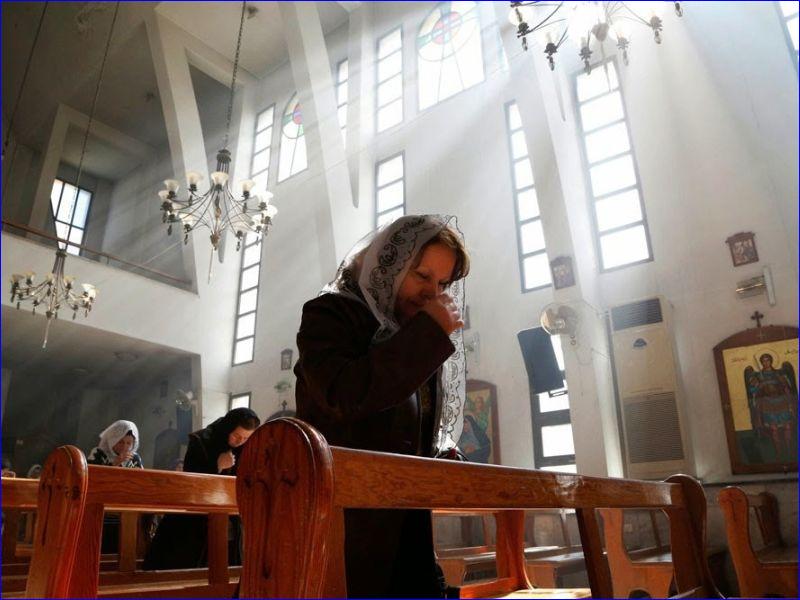
For generations, Christianity was woven into northern Iraq's cultural and religious landscape. Mosul was one of the most important centers of that Christian presence. According to International Christian Concern (ICC), Iraq was home to roughly 1.5 million Christians about two decades earlier.
By 2023, that number had fallen to about 150,000 believers. If those estimates are used, Iraq lost roughly 90% of its Christian population within a generation. The decline is extraordinary, but it did not begin with ISIS.
The story of disappearing Iraqi Christianity cannot begin in 2014. Christians had already been leaving for years. Following the 2003 invasion of Iraq and the collapse of Saddam Hussein's government, the country entered a period of political instability, insurgency, terrorism, and sectarian conflict.
Christians often found themselves especially vulnerable. Churches were attacked. Christian businesses were targeted. Clergy members were kidnapped or killed. Families faced intimidation and threats. Weak government institutions and deteriorating security convinced many Christians that remaining in Iraq meant accepting an increasingly uncertain future.
By the time ISIS emerged, thousands of Christian families had already concluded that their children might be safer somewhere else. That distinction matters. ISIS became the most recognizable symbol of Christian persecution in Iraq, but it did not create the conditions that first pushed Christians to leave. It accelerated an exodus that was already underway.
ISIS Expands
In June 2014, ISIS captured Mosul. Soon afterward, the organization declared its self-proclaimed caliphate from the city. For Christians, the consequences were immediate. Then ISIS turned toward the Nineveh Plains, an area containing some of Iraq's oldest Christian towns and villages.
On Aug. 6 and 7, 2014, Christian communities emptied as militants advanced. Families fled Qaraqosh and surrounding towns toward territory controlled by the Kurdistan Regional Government. ICC later described the events as a genocide that fundamentally changed Iraq's Christian population.
Behind the fleeing families were houses, farms, churches, businesses, schools, family photographs, and generations of history. Some families believed they would return within days.
Instead, displacement lasted for years. Many never returned at all.
Ten years later, ICC reported that only a fraction of Iraq's Christian population had returned to rebuild homes, churches, businesses, and farms across the Nineveh Plains. ISIS was eventually driven from much of the territory it had seized, but by then many of the families were gone.
The military defeat of ISIS created something Iraqi Christians had desperately wanted: the possibility of returning home. Those who returned rebuilt houses, reopened shops, repaired churches, replanted fields, and attempted to restore communities that ISIS had tried to destroy. Those efforts became remarkable demonstrations of resilience. But rebuilding a building is easier than rebuilding trust.
Families remembered how quickly security collapsed in 2014. They remembered fleeing with almost nothing. They remembered neighbors disappearing, government institutions failing, and armed extremists attacking and killing their friends and neighbors. Returning would require more than repairing a house. Families had to believe that what happened once would not happen again. Many could not.
The Exodus Continues
The defeat of ISIS did not eliminate the forces pushing Christians from Iraq. For many families, returning meant going back to areas where employment remained limited, infrastructure was damaged, political instability persisted, and competing armed groups still influenced local security.
In 2023, ICC documented the Christian efforts and challenges to rebuild the Nineveh Plains. The decision is more complicated than whether a house is still standing. Parents must ask themselves important questions. Can I find work? Will my children have a future here? Will our property remain ours? Who controls the roads and checkpoints? Can the government protect us? Could another extremist movement emerge?
A family does not need to see militants approaching its village before deciding to leave. Sometimes the memory of the last attack is enough. That is one reason the disappearance of Iraqi Christianity has continued even after ISIS lost its territory.
The most dramatic form of Christian disappearance occurred in 2014, when entire communities fled within hours.
What followed has been quieter. One family emigrates. Then another. A young adult leaves for university and never returns. A doctor moves abroad. A business owner decides rebuilding is too risky. Parents join relatives already living in Europe, Australia, or North America. The local congregation becomes smaller. Christian school enrollment declines. Young Christians have fewer opportunities to find spouses within their own communities.
Eventually, emigration begins producing more emigration.
The Question Has Changed
Iraqi Christianity survived ISIS. Churches reopened. Families returned. Christian worship continues across the Nineveh Plains, Kurdistan, Baghdad, and elsewhere. However, survival is not the same as recovery or security.
When a Christian population once numbering well over a million falls to only a fraction of that size, the question can no longer simply be: Did Christianity survive ISIS? The more difficult question is: Can Christianity in Iraq remain large enough to sustain itself for another generation?
ICC continues working alongside Iraq's Christian communities as they rebuild after years of persecution and displacement.
In the Nineveh Plains, ICC has helped hundreds of Christian families during displacement and return, while also supporting efforts to restore homes, livelihoods, small businesses, and community infrastructure. More recently, ICC highlighted projects that helped Iraqi Christian families reopen shops and rebuild sources of income so returning home could become sustainable.
On Sunday, June 22, 2025, Christians gathered for worship inside Mar Elias Greek Orthodox Church in Damascus. Families sat together, prayers were spoken, and the familiar rhythms of worship continued in a city with a healthy Christian population for nearly two thousand years.
Then a man entered the church carrying explosives.
According to International Christian Concern, the attacker opened fire before detonating an explosive vest inside the sanctuary. At least 22 worshippers were killed and dozens more were wounded. The attack came amid continuing concern about Islamic State group activity and the vulnerability of Syria's religious minorities.
The bombing was horrifying, but for Syria's Christians, it was also familiar in another sense. For more than a decade, nearly every new attack has carried the same underlying question: Is there still a future for us here? Civil war, Islamic extremism, economic collapse, displacement, and repeated political upheaval have each taken something from Syria's Christian population.
Syria occupies an extraordinary place in Christian history. Damascus appears prominently in the New Testament, most famously in the account of the Apostle Paul's conversion on the road to the city.
Antioch, the historical Syrian region now part of modern Turkey, became one of Christianity's earliest and most influential centers. Across Syria, ancient Christian towns and villages survived for centuries.
In Maaloula, residents preserved forms of Aramaic, the language closely associated with Jesus. In Aleppo and Damascus, Armenian, Syriac, Greek Orthodox, Melkite Catholic, Maronite, Evangelical, and other Christian communities became deeply woven into the social fabric of the cities.
Before Syria's civil war began in 2011, Christians numbered about 1.5 million, according to ICC's reporting on the country's postwar transition. Then the country fractured. Protests that began in 2011 grew into a devastating civil war involving the Syrian government, opposition groups, Kurdish forces, Islamist factions, ISIS, and numerous foreign powers. Entire cities became battlefields and millions of Syrians fled. Many never returned.
Few cities demonstrate Syria's Christian decline as clearly as Aleppo. For generations, Aleppo contained one of the country's largest Christian populations.
Churches, schools, businesses, and neighborhoods reflected centuries of Christian presence. Then the war arrived. By December 2023, ICC estimated that roughly 200,000 Christians had left Aleppo since the beginning of the conflict.
Far to the northeast, another Christian community tells an even more dramatic story. For decades, Christian villages lined the Khabur River. Then ISIS came.
In 2015, militants attacked Assyrian villages, kidnapped Christians, and drove families from their homes. Years later, the population had barely recovered. ICC reported that the Christian population of Syria's Khabur Valley had fallen from about 15,000 people to only a few hundred.
ISIS Was Only Part of the Story
It would be easy to explain Syria's Christian exodus entirely through Islamic extremism, but that would be incomplete.
ISIS and other extremist organizations inflicted extraordinary suffering on Christian communities. Christians faced kidnapping, execution, church destruction, displacement, and threats directed at their religious identity.
Yet the war itself also created conditions that made ordinary life increasingly difficult. Electricity became unreliable. Infrastructure deteriorated. Jobs disappeared. Food prices increased. Housing was destroyed. Young people saw few opportunities, and families were separated across borders.
ICC has repeatedly documented that economic deterioration became one of the forces pushing Christians out. It reported in 2023 that roughly 80% of Syria's Christians were believed to have left during the previous two decades, leaving an estimated Christian population of around 200,000 people.
Estimates vary because war and mass displacement have made reliable demographic measurements extremely difficult. But the direction of the numbers is unmistakable: Syria is losing Christians.
There is an important difference between leaving because someone threatens to kill you and leaving because everyday life has become impossible, but for Christian communities the two can become closely connected.
A family may initially flee its town because of ISIS and move to Damascus. Then the father cannot find work, the children struggle to continue school, and relatives who have already emigrated encourage the family to join them abroad.
Eventually, the family leaves Syria permanently. What began with persecution ends with emigration.
Assad's Fall
In December 2024, Syria changed again. After more than two decades in power, Bashar al-Assad's government collapsed following a rapid rebel offensive.
Assad fled the country, and Hay'at Tahrir al-Sham (HTS) emerged as the dominant force behind Syria's new political order.
For many Syrians, Assad's fall represented the end of a brutal authoritarian system. For Christians, however, it also introduced another period of uncertainty.
HTS had roots in the Islamist militant movement and had previously been associated with al-Qaida's Syrian branch. Its leadership attempted to reassure religious minorities as it took power.
As rebel forces entered Aleppo, ICC reported that Ahmed al-Sharaa, then widely known as Abu Mohammad al-Jolani, emphasized religious diversity and instructed fighters to protect minorities.
Early reports from Christian neighborhoods included assurances that churches and Christmas celebrations would be respected. But Christians had lived through too many sudden changes of power to rely on promises alone. They watched carefully to see what the new Syria would become.
Only weeks after Assad's fall, masked men burned a Christmas tree in the Christian-majority town of Al-Suqaylabiyah. Christians took to the streets.
ICC reported that hundreds protested and demanded protection for Christian religious practices and symbols. Syrian Christians were not simply asking whether they would be allowed to survive. They were asking whether they would be allowed to remain publicly Christian. That question became even more urgent after the attack on Mar Elias Church six months later.
The June 2025 bombing in Damascus was among the deadliest attacks on Syrian Christians in years. People had gone to church to pray. Some left in ambulances; others never left alive. The news reported the attack as part of an environment of violence and instability confronting minorities during Syria's political transition. The future for Syrian Christians remained uncertain. That uncertainty has demographic consequences.
The Future of Syria
Christianity has not disappeared from Syria. In Damascus, Aleppo, Maaloula, and elsewhere, Christians still gather for worship. Priests celebrate Mass. Pastors preach. Churches provide food and assistance to struggling families. Parents baptize children. Christmas is still celebrated.
In northeastern Syria, tiny communities continue living in villages that once held thousands. Their presence carries extraordinary historical weight. These Christians are not preserving a museum exhibit. They are preserving a living civilization.
That distinction matters because the goal cannot simply be to preserve ancient churches after their congregations disappear. The survival of Christianity in Syria depends on Christians being able to remain in their homeland with security, dignity, economic opportunity, and genuine religious freedom.
ICC works directly with vulnerable Christians in Syria as they face displacement, economic hardship, and insecurity. ICC has supported families by providing medical aid and necessities, helping create income opportunities, assisting churches as they care for traumatized communities, and supporting Christians rebuilding in places such as Aleppo and Homs.
Part four of this series turns to Lebanon, a country long considered the strongest remaining center of Christian political and cultural influence in the Arab Middle East. Unlike Iraq and Syria, where war and extremist violence drove dramatic waves of Christian displacement, Lebanon's Christian decline has unfolded through a more complicated combination. This includes civil war, political instability, economic collapse, emigration, and demographic change.
or register to post a comment.