


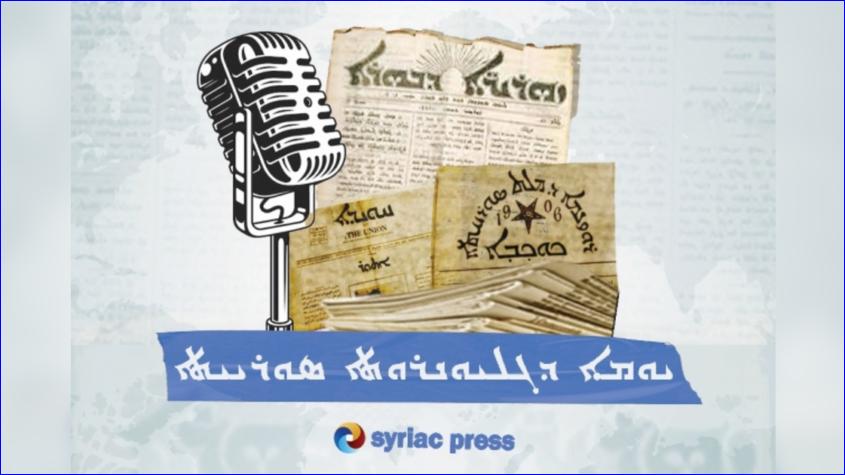
Although journalism in its modern institutional sense emerged relatively late in history, some forms of recording news and documenting events date back to ancient civilizations, particularly those of Bethnahrin. The Babylonians and Assyrians used clay tablets to record events, correspondence, and administrative, economic, and religious affairs. These records served as an essential means of preserving and circulating information within official institutions and centers, although their nature and function differed from those of journalism in its contemporary sense.
The region of Urmiya (Urmia), in northwestern Iran, was one of the important milestones in the history of the Assyrian cultural and journalistic renaissance. During the 19th century, the region witnessed considerable educational and cultural activity, supported in part by Protestant missionary organizations that arrived in the 1830s. These organizations worked to establish schools and printing presses and promote education and printing in the Eastern Assyrian language.
During this period, a large number of religious and scientific books were printed in Assyrian. Historical accounts indicate that more than 110,000 copies were published between 1837 and 1873. Educational efforts also helped spread literacy and develop the use of the Assyrian alphabet, paving the way for a generation of educated individuals and intellectuals capable of producing literature and exchanging ideas.
Amid these developments, the newspaper Zahrire d'Bahra (ܙܗܪܝܪܐ ܕܒܗܪܐ/Rays of Light) emerged as one of the most significant milestones in the establishment of modern Assyrian journalism. It provided a platform for publishing religious, cultural, scientific, and literary material, helping expand the presence of the Assyrian language in public life and move it beyond education and religious writing into a broader sphere of cultural and social debate.
As education spread and new intellectual circles emerged, Assyrian journalism began to move beyond its informational and educational functions, becoming a means of expressing national and patriotic concerns, defending identity and rights, and strengthening a shared sense of belonging.
Assyrian journalism can be divided into 2 main categories according to the language of publication. The first comprises publications issued in Assyrian, in both its Eastern and Western dialects, including newspapers, magazines, and cultural and literary publications. The second includes Arabic-language publications that addressed the social, political, and cultural affairs and concerns of the Suroyo people.
Assyrian publications were not limited to a single language. Some newspapers and magazines also included other languages, depending on their place of publication and target audience. These included Arabic, Turkish, Russian, Armenian, and English. In some publications, other languages were written using Assyrian letters, a practice known as Garshuni. This was because readers were familiar with the Assyrian alphabet and were not necessarily proficient in the alphabets of other languages.
This linguistic diversity helped expand readership, connect Assyrian communities with their surrounding societies, and enable journalism to play a role beyond geographical and political boundaries.
Assyrian journalism went through successive historical stages shaped by the political and social transformations and migration movements experienced by the regions inhabited by the Suroyo people. Its development can be divided into six main stages:
- The emergence and establishment stage: This period witnessed the arrival of printing presses and the first publications, the launch of newspapers and magazines in Assyrian, and the spread of education and growing cultural activity.
- The displacement and migration stage: This period was associated with political instability and persecution that forced many Suroyo people to leave their homes and transfer their journalistic and cultural activities to new countries.
- The national and patriotic awareness stage: National and patriotic themes gained greater prominence, with journalism becoming a platform for expressing shared identity and addressing issues related to the people's future and rights.
- The stage of the issuance of the law granting rights: This period witnessed developments in cultural and media activities amid legal and political changes concerning the rights of ethnic and linguistic communities.
- The period following the First Gulf War: Journalism was affected by the changes that swept Iraq and the wider region, the migration, and the social and political transformations that influenced media and cultural institutions.
- The period of the New Iraq after 2003: This stage saw the expansion of media activities, the emergence of new outlets and platforms, and the transition of part of Assyrian journalism into the digital sphere.
- The Assyrian journalistic renaissance was associated with several writers and intellectuals who worked to develop the language and literature, promote national awareness, and defend identity and rights. Among the most prominent were Naum Faik, Ashur Yusuf, Yusuf Malik, Farid Nazha, Yukhanna Moshi, Faridun Athuraya, Yoel Warda, Sanharib Bali, and Yohanon Qashisho.
These pioneers left behind an intellectual and journalistic legacy that extended beyond articles and publications. They helped establish journalism as a tool for education and awareness and a platform for discussing social, political, and cultural issues, while strengthening the position of the Assyrian language in public life.
Journalism was not solely responsible for the linguistic and literary renaissance. Its role complemented that of Assyrian churches, schools, and cultural institutions, which played an essential part in education and heritage preservation. Newspapers and magazines also gave writers, intellectuals, and clergy the opportunity to reach wider audiences, at a time when religious and educational institutions had served for centuries as the primary spaces for producing and exchanging knowledge.
The newspaper Zahrire d'Bahra holds a prominent place in the history of Assyrian journalism. Its emergence was closely linked to the printing and educational activity that took place in Urmiya during the 19th century, supported by American missionary organizations that helped establish the region's first printing press in 1840 in cooperation with several clergymen.
The newspaper was distinguished by its relatively long publication history, which spanned approximately 69 years despite limited resources and the challenges it faced. Its early issues were predominantly religious in nature, but its coverage later expanded to include scientific, literary, cultural, and social topics, attracting a number of intellectuals and writers of the period.
The significance of Zahrire d'Bahra went beyond its status as a periodical. It also helped establish traditions of Assyrian journalism and demonstrated the language's ability to accommodate a wide range of subjects and present them to readers on a regular basis.
In 1910, the first issue of Kawekbo d'Madenho ( ???????? ???????? / Star of the East) was published. The magazine was associated with the intellectual and journalist Naum Faik, one of the most prominent pioneers of the Assyrian national renaissance. Faik published poems and articles in Assyrian, Arabic, and Turkish, reflecting a cultural approach aimed at reaching diverse readerships.
However, growing hostility toward Christian minorities in the Ottoman Empire forced Naum Faik to emigrate to the United States, affecting the magazine's continuity. It suspended publication for two years after producing 43 issues. Some of its issues are still preserved at the New York Public Library as important historical documents of Assyrian journalism.
Naum Faik continued his journalistic activities by publishing the newspaper "Bethnahrin," whose first issue appeared on 1 January 1916, in Turkish written using Assyrian letters, following the Garshuni tradition. The newspaper continued publishing for approximately six years, focusing on revitalizing the Assyrian language, calling for the establishment of scientific institutes, social associations, and charitable organizations, and addressing national and patriotic issues.
Faik also helped launch the magazine Huyodo (Unity), which served as the voice of the Assyrian National Association in the United States. Its first issue was published on 28 May 1921, under Faik's editorship. It was issued weekly and featured content in Assyrian, Arabic, Turkish, and English before ceasing publication on 25 March 1922.
The experience of Huyodo reflects the role played by Assyrian journalism in the diaspora. It went beyond reporting news to preserving cultural and national ties among members of the diaspora and continuing the intellectual tradition established by the pioneers of the Assyrian renaissance.
At a later stage, the magazine Bahro Suroyo (Assyrian Light) emerged. It was published by the Federation of the Assyrian Associations in Sweden, with its first issue appearing in 1979 in four languages: Assyrian, Swedish, Arabic, and Turkish.
The magazine was distinguished by its linguistic quality and interest in heritage and ecclesiastical subjects, while also covering social, literary, scientific, and political issues. It devoted considerable space to news about clergy and church institutions. Its editorials were generally written in Modern Standard Arabic, although the Tur Abdin dialect was used in some issues.
The magazine represented an example of the continuation of Assyrian journalistic activity beyond its historical homeland and demonstrated the ability of diaspora cultural institutions to establish multilingual media platforms that combine heritage preservation with coverage of contemporary community issues.
Suroyo media: A cross-border media presence
As contemporary Assyrian media developed, the Suroyo Media Foundation emerged as one of the media institutions that helped expand the presence of Suroyo people's issues at both local and international levels through a range of media outlets. These include Suroyo TV, which broadcasts in Assyrian and operates through branches and offices in Syria, Lebanon, Sweden, and the Netherlands.
Over the years and decades, as journalism evolved from print to audio and visual media, the Suroyo people kept pace with these developments. Suroyo TV marked the first step toward visual media in 2004, seeking to serve as a voice for the Suroyo people in their historical homeland of Bethnahrin and throughout the diaspora.
Through studios in Syria, Iraq, Lebanon, and Sweden, Suroyo TV highlighted the national issues of the Suroyo people through various programs and news bulletins. It also provided considerable space for promoting Assyrian culture, with particular attention to the affairs of Suroyo women and calls for protecting their rights and achievements.
In 2019, Assyrian Press was launched to report on the reality of the Suroyo people in their historical homeland, reflect the everyday life they experience in their homeland, and serve as a platform for their voices in their pursuit of their historical and national rights.
In the same year, Suroyo Radio began its experimental broadcast from Zalin (Qamishlo), in northeastern Syria, serving as a link between Suroyo people at home and abroad.
Together, these outlets form a diverse media network that brings together television, radio, print journalism, and digital media.
The Suroyo Media Foundation has contributed to reporting on the affairs of the Suroyo people and following their political, social, cultural, and religious issues. It has also highlighted the challenges they face and their aspirations in their areas of residence and across the diaspora, while promoting their language, heritage, and identity through content directed at Assyrian, Arab, and international audiences.
In March 2012, the newspaper Gazete Sabro, meaning "Hope" in Assyrian, was established in the city of Merde (Mardin). Its aim was to continue the legacy of the founding pioneers of Assyrian journalism and highlight the issues facing the Suroyo people in Tur Abdin and Turkey in particular, using the Turkish language. It also sought to serve as a bridge between Assyrian communities in their homeland and the diaspora.
Initially published monthly, the newspaper later developed its operations to publish several political, religious, social, cultural articles, and opinion pieces, on a daily basis.
This media presence represents a continuation of the journey begun by the pioneers of Assyrian journalism more than a century ago, when they made the printed word a means of protecting their language and promoting national awareness. Modern media institutions continue this mission using more advanced and widespread tools and technologies.
Over recent decades, Assyrian journalism has undergone significant changes in its methods of production and distribution, with part of its activity shifting from printed newspapers and magazines to websites and digital platforms. This transition has enabled Assyrian content to reach wider audiences and overcome the geographical boundaries that once limited the circulation of printed publications. It has also created new opportunities for publishing news and cultural and literary material in multiple languages.
Nevertheless, Assyrian journalism continues to face challenges related to the sustainability of media institutions, securing financial and professional support, developing content in the mother tongue, and training new generations of journalists and writers capable of combining linguistic knowledge with modern media skills.
From its beginnings in Urmiya during the 19th century, through the experiences of pioneers who carried their pens across countries in the region and the diaspora, to today's digital platforms, Assyrian journalism remains an essential part of the effort to preserve language, memory, and identity. It has always been more than a means of reporting news. It is a space for documenting history, producing knowledge, expressing community concerns, and passing the legacy of previous generations on to those yet to come.
or register to post a comment.