


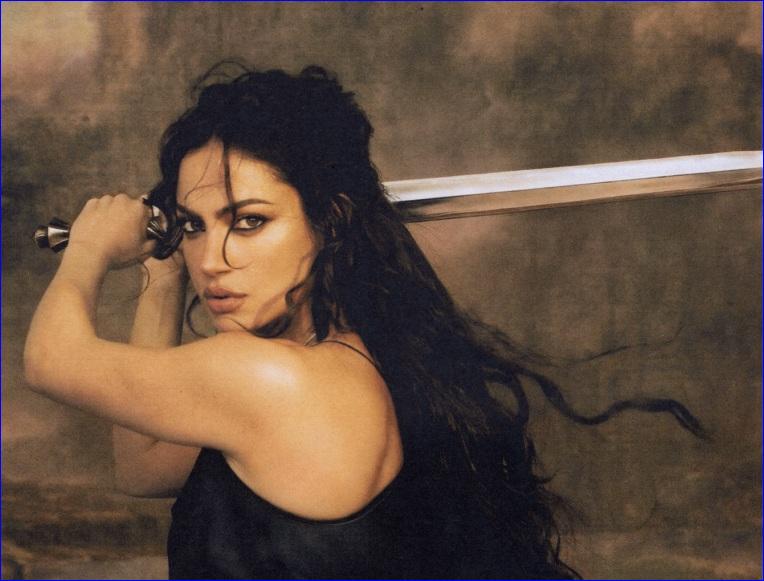
Drawing on her own Assyrian roots, Sarkis isn't just writing a comeback for a forgotten goddess; she's writing a blueprint for reclaiming your power when the world's already decided who you are.
Cosmopolitan Middle East caught up with Inanna to discuss her narrative, what it means to write from a deeper place, and why this could be the most powerful story she's ever told.
Cosmo ME: For the people who haven't picked it up yet, can you tell us what the graphic novel is about?
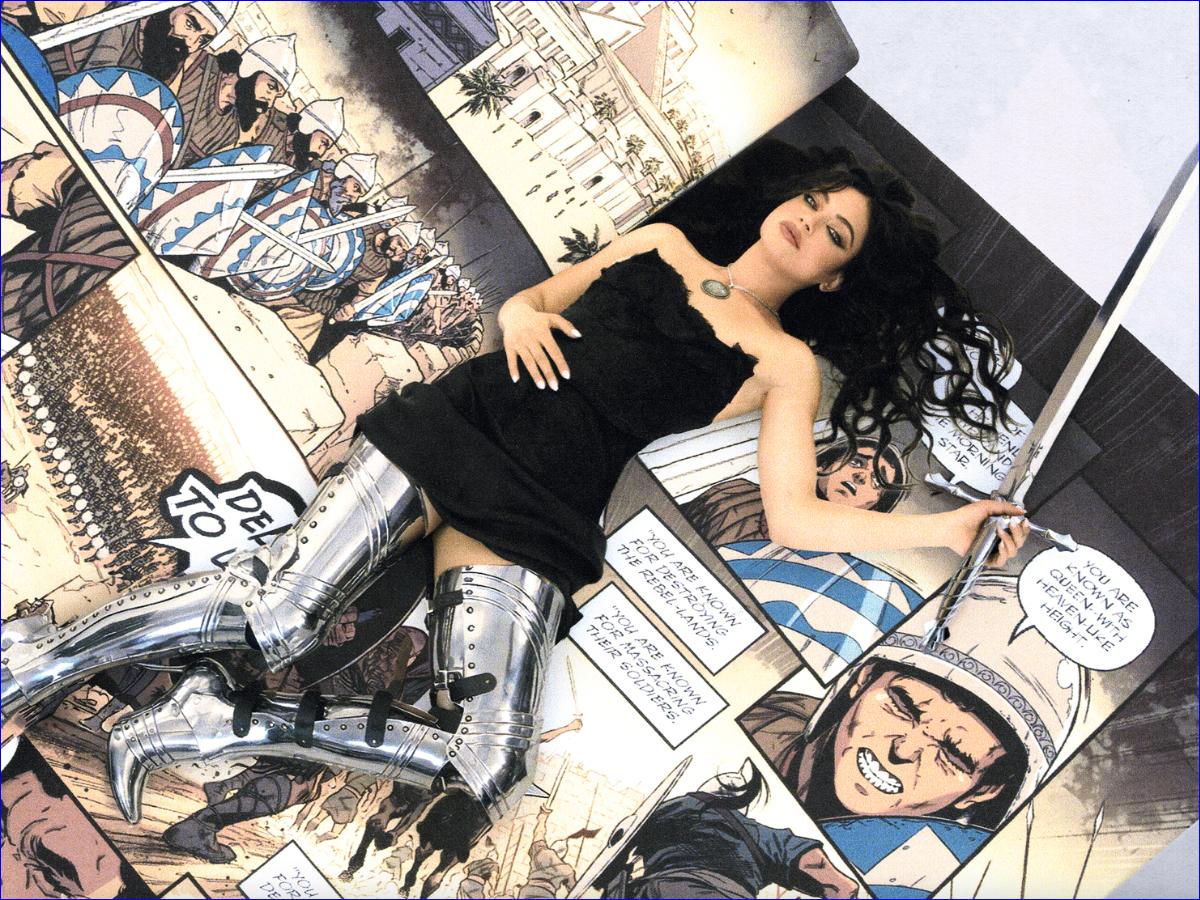
Inanna: The Name She Lost follows a young girl who wakes up with no memory of who she is or where she came from. The first thing that comes back to her is her name, Inanna. She's guided through a modern urban world by fragments of ancient Sumerian mythology that she slowly begins to piece together as her own origin story. At its core, the story is about identity, power, and the parts of ourselves we lose and have to fight to reclaim. It blends mythology with a very grounded modern twist.
Cosmo ME: The name Inanna carries so much history. What does it mean to you, and what does the character represent?
Inanna: It means everything to me. Inanna is one of the oldest recorded deities in human history, and what struck me most is how fully dimensional she is. A goddess of love AND war, wisdom AND desire. She descends into the underworld and comes back. She represents power but also resilience. That arc of going into the darkest version of yourself and surviving it felt personal to me. I wanted to take parts of that ancient energy and show how it lives in us today, particularly in women. And, honestly, it feels like something my inner child always wanted to prove. My name, something I spent so long feeling embarrassed about, has given me so much power and history to share. To build something this beautiful, inspired by nothing more than a name. It's been a dream.
Cosmo ME: How did growing up between your Bulgarian, Assyrian, and Canadian identities shape your sense of self?
Inanna: For a long time, it created so much confusion. I never felt like I truly belonged anywhere. I did not feel Eastern European enough, Middle Eastern enough, or Canadian enough. Explaining my Assyrian roots was always a process since no one ever knew what that was. And then, there were times when a lot of people thought I was Spanish or Italian, and many times, I just wouldn't correct them because it felt easier. But that in-between space is where all my creative instincts live. The Assyrian side of my heritage carries the weight of people whose history has been nearly erased, which has made me want to place our stories in the present and introduce them to my generation.
Cosmo ME: When did you realise this was a story you needed to tell?
Inanna: I remember being in my tiny studio apartment when I first moved to LA, trying to sketch out this character. I had been doing research on where my name came from, and something just clicked. I knew I wanted her to be a warrior. The goddess Inanna in human form. I always thought she would make a perfect superhero. And the more I auditioned, the more I fell into the entertainment world, the more I realised I had to create the characters I wanted to play. Characters that are leads, that look like me, reflect my culture, and showcase real strength. But beyond that, I realised no one else was going to tell the story I was dreaming up. The characters I needed most as a young woman did not exist for me in the way I needed them. I could not find a protagonist who looked like me. So, I started building her myself. But I knew I needed help.
Cosmo ME: What surprised you most about bringing the graphic novel to life?
Inanna: It takes an entire team. And I say that having tried to bring this vision to life so many times before, on my own, with other writers, other authors, other publishing teams. At one point, it was going to be a novel. It went through so many forms before I finally found Vault Comics, which completely understood what I was trying to build. We went back to the original vision of it living as a comic, and our editor, Adrian Wassel, helped me assemble the right people around me. Tim Seeley came on to help write it, Ademir Leal brought the artwork to life, and from there it just kept expanding. Sketching, colourists, dialogue placement, page layout, character design, costume, all of it. There are so many more moving parts than I ever anticipated. But that is also what made it so freeing. I was not just telling a story through words. I was building an entire world you could see. Every panel is a creative decision. That surprised me more than anything and made me appreciate graphic novels so much more.
Cosmo ME: What has it been like sharing something so personal with the world?
Inanna: Terrifying yet exciting. It gives me anxiety just thinking about having to talk about it once it is out. Part of me wants to launch the book and disappear somewhere quiet, which I know would be a terrible marketing strategy. But after our issue zero, basically the first chapter, released on Free Comic Book Day, the response genuinely surprised me. The feedback has been so warm -- and that has helped. I still do not fully know how I will feel when the book comes out in September. I just hope there's at least one girl out there who will read it and see herself in it.
Cosmo ME: Did your platform influence this project, or was it simply a story you needed to create?
Inanna: Both, honestly. I knew when I was building my platform what I wanted to do with it. I always wanted to show things of substance and meaning, even when I was doing YouTube. I had a reach, and I knew I didn't want to post mindless content. I have taken so many breaks from social media over the years just to create, write, and produce things I actually feel proud of. This graphic novel was something I knew I needed to make because it had been on my mind for so many years. It's like it had been living inside me for so long, just growing and growing, and I needed to push it out. It needed to be "birthed"; otherwise, it would have driven me mad. My platform ultimately helped me reach specific people, but the story had existed long before any of that.
Cosmo ME: What does it mean to be bringing Assyrian stories and perspectives into the spotlight?
Inanna: It makes the inner child in me so proud. It is honestly insane to me that the Assyrian people are one of the oldest civilisations on earth, and yet we are largely invisible in mainstream culture. I grew up not seeing my face, my name, or my people's stories reflected anywhere. When you do not see yourself in the culture, it sends a message about your worth. I want young Assyrians to pick this up and feel seen in a way I never was. But beyond our community, I want the world to know we exist. Our history, our mythology, our faces. This book is a reminder of that.
Cosmo ME: When readers finish the last page, what do you hope they take away from it?
Inanna: Empowered. Like something was returned to them. Like they remembered a part of themselves they had put away. The story is about a woman reclaiming her name, her memory, her power, despite the many forces trying to stop her, and I think that feeling belongs to everyone, regardless of where they come from. I want them to close it and face the version of themselves they have been running from.
Cosmo ME: What's next for you?
Inanna: This is just the beginning. The graphic novel is a story I'm actively developing for film, too. I also have a feature film called Touch the Sky, which I am directing and starring in later this year; it is a very different story but equally personal. And I am acting in a few projects that I can't mention yet, but keep an eye out! Basically, I am in a season of building things that matter and are meant to last. The era of creating just to create is behind me. Everything I am putting out now has roots. In my culture, my beliefs, and my love for the arts.
or register to post a comment.