


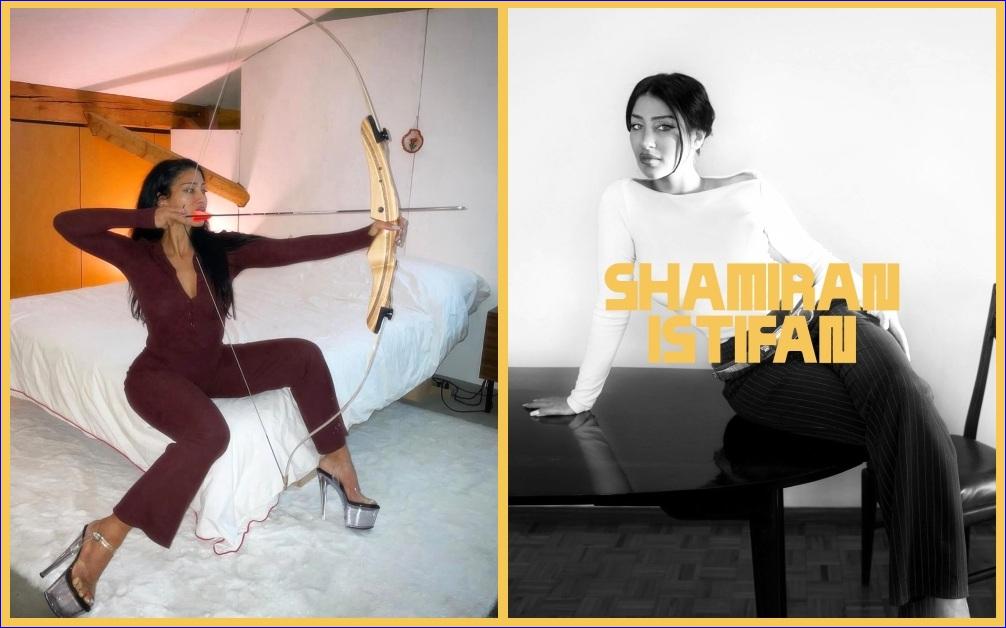
The exhibition marks a significant moment in the career of the 39-year-old artist. Awarded the Manor Art Prize Aarau 2026, one of Switzerland's most respected honors for emerging contemporary artists, Istifan returns to the canton where she was born and raised. For an artist whose work has long explored the tensions between home and displacement, the exhibition is less a homecoming than a reconsideration of the place that shaped her.
Now based in Zurich, Istifan was born in Baden in 1987 to parents originally from Beth Zabday / Azakh (Idil) in Tur Abdin. She grew up within Switzerland's Assyrian community, one of Europe's largest Suraye diaspora populations. Decades of conflict and persecution across Iraq, Syria, and southeastern Turkey led thousands of Suraye to settle in Switzerland, where they built new communities while maintaining distinct religious, linguistic, and cultural traditions. Growing up in that environment meant navigating multiple identities simultaneously -- Swiss in everyday life, yet connected to a heritage rooted in Beth Nahrin (Mesopotamia).
That experience has become the foundation of Istifan's artistic practice.
Rather than depicting diaspora through scenes of migration or political conflict, she investigates its quieter manifestations. The objects people surround themselves with, the symbols they inherit, and the visual languages they unconsciously adopt. Her installations ask how identity is constructed through architecture, consumer culture, religious imagery, and domestic rituals.
"I love that banal objects or visuals are -- sometimes unconsciously -- charged with meaning, even becoming sacred," Istifan explained in an interview with YEOJA Magazine. That fascination with ordinary objects transformed by collective memory runs throughout her work.
 ullmann photography)
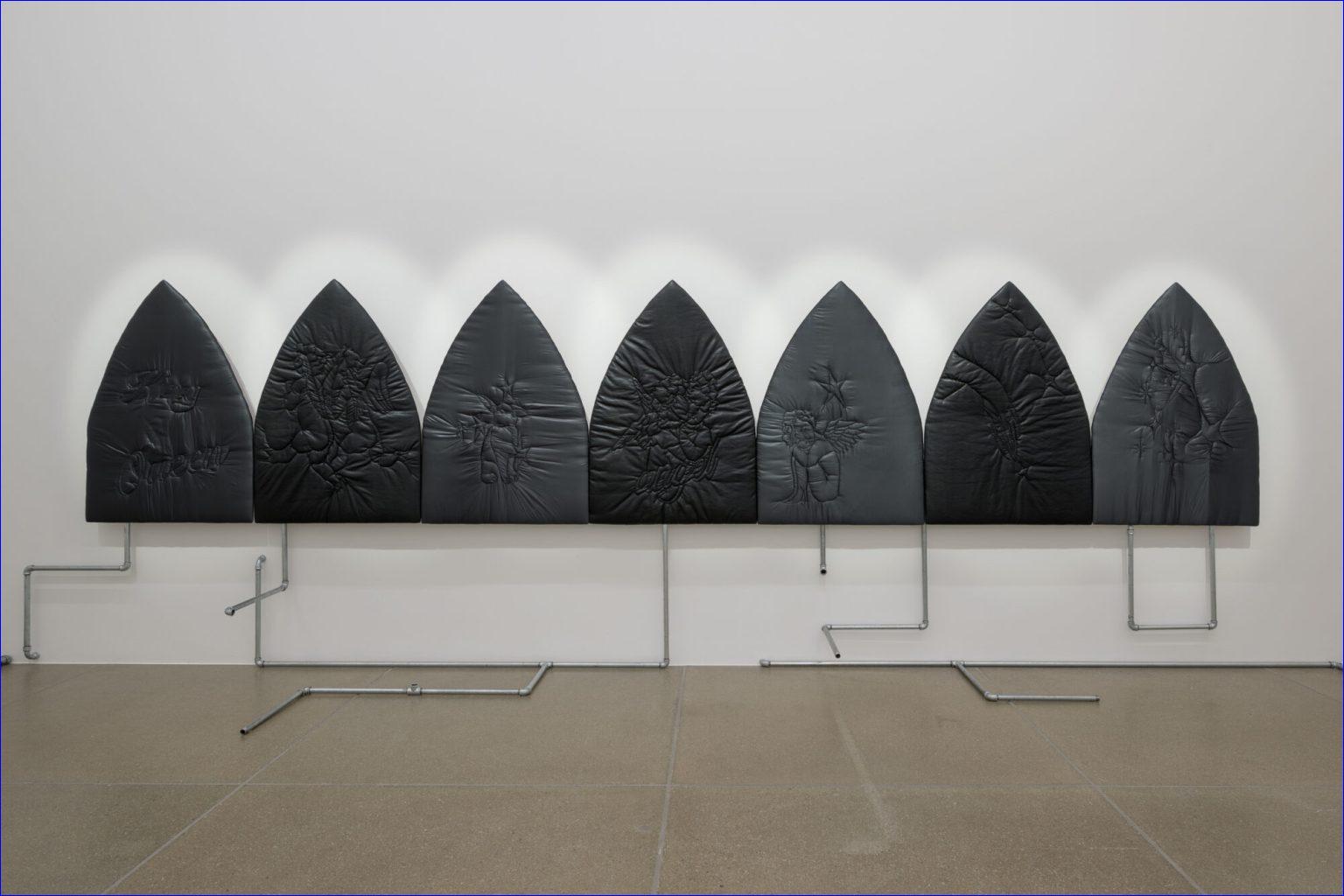
At the Aargauer Kunsthaus, those ideas unfold through a series of newly commissioned works that blur the boundaries between public and private space. Mailboxes become monuments to hidden lives. Paving stones suggest both permanence and movement. Cosmetics and beauty products sit comfortably beside references to sacred iconography, collapsing distinctions between consumer culture and ritual.
For curator Sarah Mühlebach, these intersections define the exhibition's conceptual core. Rather than presenting fixed identities, she writes, Istifan's installations occupy "threshold situations: between inside and outside, visibility and invisibility, private and public." The works, she argues, ask who is permitted to occupy certain spaces, who remains excluded, and how those invisible boundaries shape everyday experience.
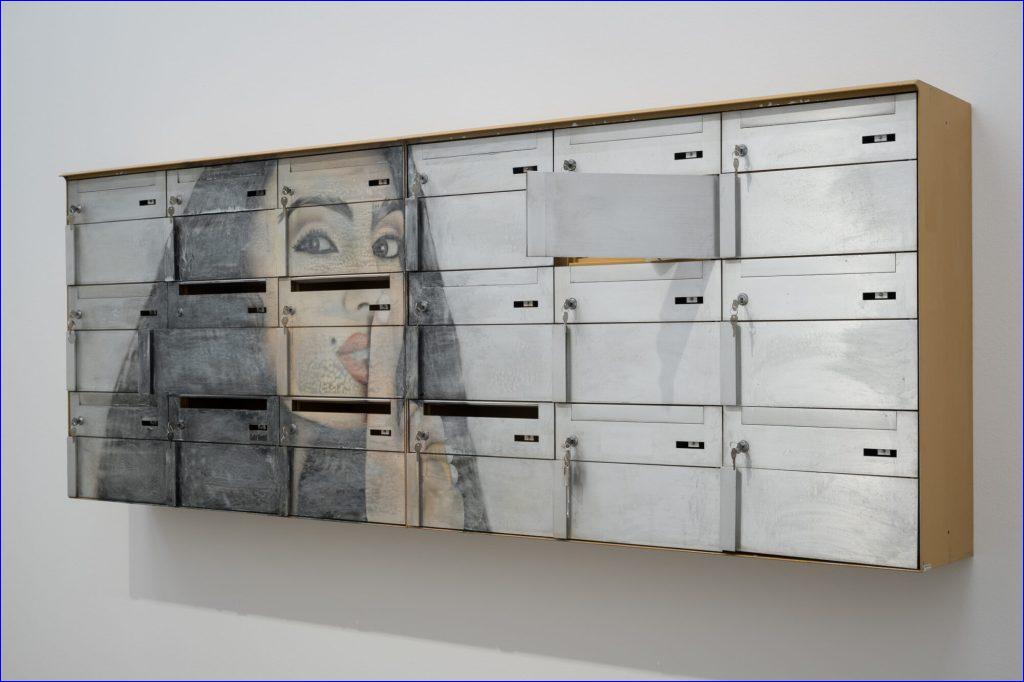
One of the exhibition's strongest new works, Inbox (2026), transforms a row of standard Swiss mailboxes into an unexpected meditation on identity and bureaucracy. Mounted on the museum wall, the face of Lebanese pop icon Haifa Wehbe, painted over the mailboxes, stares directly back at the viewer, her finger pressed against her lips in a gesture of silence.
The juxtaposition is striking. The mailbox -- a symbol of administration, order and routine -- is interrupted by a glamorous figure associated with Arab popular culture. The work invites viewers to consider how personal histories remain concealed behind standardized systems. As Mühlebach observes, the installation "contains untold personal stories" while simultaneously pointing toward broader structures of authority and power.
 ullmann photography)
Throughout her career, Istifan has repeatedly returned to visual symbols that exist on the margins of mainstream art history.
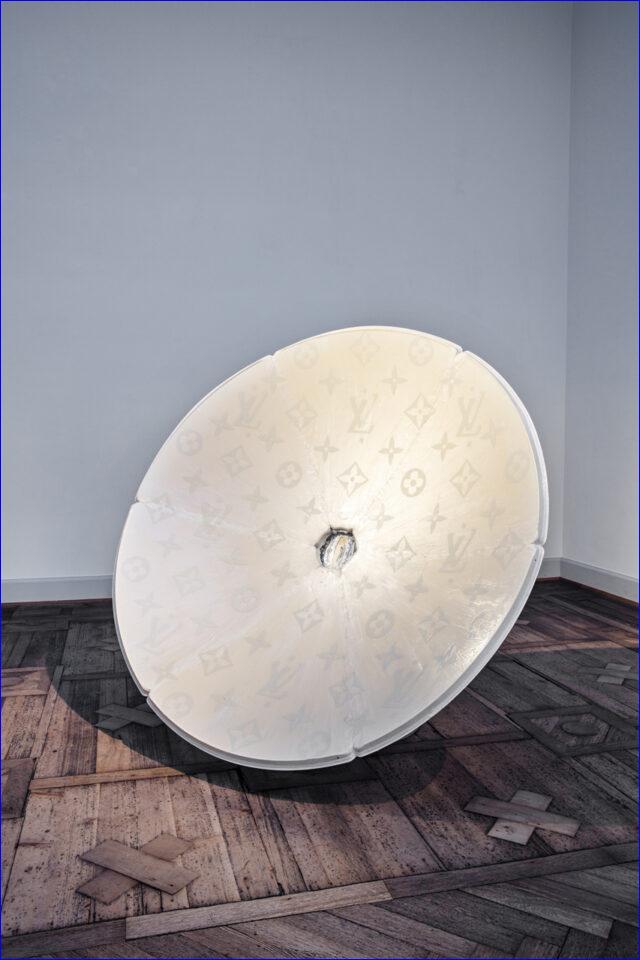
Satellite dishes, for example, are elevated from household technology to emblem of migrant neighborhoods across Europe, connecting families to television broadcasts from distant homelands. Luxury fashion logos become reflections on aspiration and cultural adaptation. Religious motifs coexist with social media aesthetics, while references to ancient history intersect with teenage memories and contemporary advertising.
In one interview, Istifan explained how counterfeit Louis Vuitton handbags popular within parts of the diaspora inspired an earlier sculpture. By subtly altering the famous monogram into an Arabic word, she transformed a globally recognizable luxury symbol into a meditation on belonging, separation, and cultural translation. The gesture encapsulates her broader artistic method of taking the familiar and revealing unexpected layers of meaning hidden within.
 Konkord Photography)
That process has earned increasing recognition across Switzerland's contemporary art scene. Over the past decade, Istifan has exhibited widely while developing a multidisciplinary practice spanning sculpture, installation, textiles and video. Her works resist straightforward autobiography, instead combining personal experience with broader questions about social structures, architecture and collective memory.
She once remarked to Elephant magazine, "I see the art world as a game." The statement suggests a playful skepticism toward artistic institutions, yet her work itself is remarkably disciplined. Beneath its polished surfaces lies careful research into how objects accumulate meaning over time and how visual culture shapes our understanding of ourselves and others.
The Manor Art Prize exhibition demonstrates the maturity of that approach.
Rather than presenting diaspora as a story of loss alone, Istifan portrays it as an everyday condition in which multiple cultural realities coexist without necessarily merging. Swiss suburban architecture, Arabic pop culture, Christian symbolism, luxury branding and childhood memories all occupy the same visual landscape. None is privileged over another. Together they form the fragmented but coherent reality of contemporary multicultural life.
By returning to the canton where she grew up, Istifan has not produced a nostalgic portrait of home. Instead, she has created something more complex. A portrait of belonging as an ongoing negotiation between memory and the present, between inherited traditions and contemporary life. Her installations ask viewers to look again at the ordinary objects surrounding them -- not because those objects are extraordinary, but because they quietly record the histories, aspirations, and identities of the people who live among them.
or register to post a comment.