


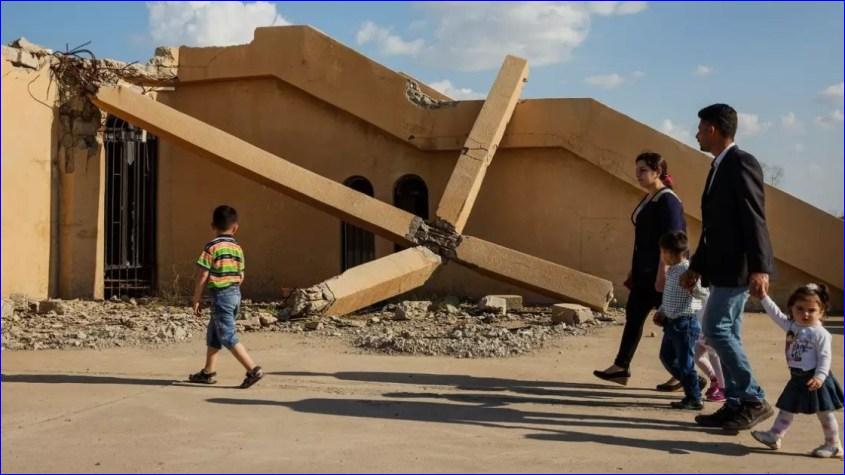
The commitments, made during al-Zaidi's meeting with Chaldean Patriarch Mar Paul III Nona have also been met with skepticism, however, amid concerns that they could follow the pattern of similar pledges made by previous Iraqi governments that were never fully implemented.
Those concerns were highlighted in a report by the investigative journalism organization Nirij titled, Al-Zaidi's Call for Migrant Christians to Return: A Gesture Toward Trump or a Serious Move to Turn the Page on the Past? The report argues that government incentives are unlikely to produce meaningful results unless chronic security challenges, political marginalization, and weak rule of law -- factors that continue to drive emigration -- are effectively addressed.
As part of its research, Nirij interviewed Christian religious and political leaders, intellectuals, and civil society activists who identified several priorities they believe must be addressed before large-scale returns can become a reality.
Among their principal demands were the restoration of confiscated and illegally occupied Christian properties, an end to discrimination against Christians, meaningful political representation in state institutions, renewed confidence in public institutions, and comprehensive security guarantees against extremist threats.
These longstanding challenges, combined with the atrocities committed by the Islamic State (ISIS) against Christians and the Assyrian people -- including massacres, forced displacement, and the destruction of churches, homes, and religious sites -- have contributed to a dramatic decline in Iraq's Christian population, from an estimated 1.5 million before 2003 to fewer than 250,000 today.
Among those interviewed was Syriac Orthodox Archbishop of Mosul, Kerkheslokh (Kirkuk), and the Kurdistan Region Mor Nicodemus Daoud Matti Sharaf. He stressed that the underlying causes of migration must be addressed before encouraging people to return.
"Calling on Christians to return without addressing what forced them to emigrate will not produce any results," he said, adding that the continued neglect of Christian concerns and the lack of equal citizenship remain among the community's greatest challenges.
The Nirij report also noted that al-Zaidi's appeal to Christians came shortly before his visit to the United States, where he met with US President Donald Trump and signed several memorandums of understanding.
As a result, some observers interpreted the initiative as a message directed primarily at Washington rather than Iraq's Christian community, intended to demonstrate that the new government is committed to protecting the country's religious and ethnic diversity while pursuing broader reforms, including anti-corruption measures and efforts to place all weapons under state control.
At the same time, many civil society activists interviewed for the report said they consider the large-scale return of Christians who have settled abroad and acquired foreign citizenship to be unrealistic in the near future.
Instead, they argued, the government's immediate priority should be improving conditions for the Christians who have chosen to remain in Iraq by creating employment opportunities, strengthening legal protections, and ensuring long-term security.
The report concludes that the sustainable return of Iraq's Christian community will depend not on government appeals alone, but on the establishment of a civil, democratic, and pluralistic state founded on equal citizenship, justice, and the rule of law.
or register to post a comment.