


 Wikimedia Commons)
The geography of this history centers on Assur, Nimrud, Nineveh, Syria, Anatolia, Levant and Egypt, while its consequences reached across Iraq and West Asia and into later global memory. Environmental constraints were decisive: rivers, deserts, mountains, coasts, highlands, trade routes and seasonal cycles shaped where people could farm, travel, store food, build monuments and defend authority. Ancient civilizations were never just collections of kings and ruins. They were systems that joined ecology, labor, belief, technology, law, language and violence.
The core themes are assyria, warfare, deportation, roads and palace reliefs. These themes matter because they expose the machinery beneath famous names. Writing could make taxation possible; roads could make empire practical; ritual could legitimate hierarchy; markets could connect distant households; and military organization could turn local power into regional domination. This row therefore gives the corpus a durable reference point for comparing ancient societies across Afro-Eurasia and the Americas.
Chronology and Turning Points
The main turning points are imperial reforms, conquest of Israel, siege of Lachish and fall of Nineveh. Each marked a change in historical capacity rather than a decorative date. A community became able to mobilize larger labor forces, transmit ideas across generations, tax land and trade, coordinate armies, preserve memory, define law, or absorb neighboring traditions into a wider political order.
- imperial reforms: this turning point changed the scale at which people could govern, remember, worship, trade or fight.
- siege of Lachish: this turning point changed the scale at which people could govern, remember, worship, trade or fight.
- fall of Nineveh: this turning point changed the scale at which people could govern, remember, worship, trade or fight.
The surrounding chronology is equally important. Earlier cultures supplied tools, crops, symbols, languages and settlement patterns. Later rulers, priests, merchants, colonizers, archaeologists and nationalist movements reinterpreted the legacy for their own purposes. That is why ancient history remains politically alive: a ruin, inscription, road, temple, manuscript or grave can become evidence in debates over identity, sovereignty, restitution and public memory.
People, Institutions and Social Systems
Important figures associated with this history include Tiglath-Pileser III, Sargon II, Sennacherib and Ashurbanipal. Some were rulers, reformers, generals, priests, philosophers, scribes, engineers or artists. Others are collective actors whose names are mostly lost: farmers, enslaved workers, craft specialists, merchants, soldiers, boat crews, builders, healers, migrants and household managers. A serious corpus must include both famous individuals and the social systems that made their actions possible.
The institutional setting included standing army, provincial governors, royal roads and palace workshops. These institutions shaped how authority was enforced, how labor was recruited, how wealth moved, how knowledge was stored and how communities explained legitimacy. They also created inequality. Palaces and temples could protect archives and sponsor art, but they could also extract grain, tribute, taxes or forced service. Ancient achievement and ancient coercion therefore have to be studied together.
Daily life connected the great institutions to ordinary survival. Food production, household economies, water control, marriage rules, craft training, market exchange and burial customs translated political power into lived experience. Where evidence is uneven, archaeologists rely on settlement plans, pollen, bones, pottery, tools, residue, inscriptions, textiles, shipwrecks and landscapes to recover groups who rarely appear in elite texts. That wider evidence keeps the history from becoming only a list of dynasties.
Knowledge, Religion and Material Culture
Assyrian Empire Warfare Deportation and Imperial Roads also mattered as a knowledge system. Its people preserved practical expertise in architecture, counting, navigation, medicine, astronomy, law, metallurgy, agriculture, textiles, water management, ritual timing or historical memory. Some knowledge was written down; some moved through apprenticeship, oral tradition, pilgrimage, military service, trade or repeated public ceremony.
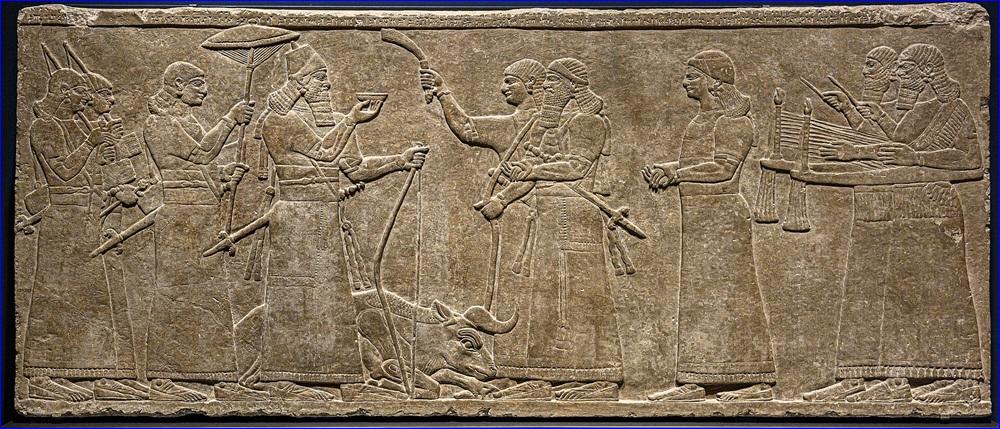
Religion and material culture were not separate from politics. Temples, tombs, palaces, stelae, sanctuaries, pyramids, roads, city walls, statues, manuscripts and ritual objects made authority visible. They turned landscapes into memory and gave later generations something to copy, destroy, excavate or claim. The licensed image attached to this row is therefore not ornamental; it gives readers a concrete visual entry into the surviving evidence.
Transformation, Decline and Legacy
No ancient civilization was static. Drought, flood, epidemic disease, migration, trade disruption, class conflict, succession crises, military defeat, religious change and environmental pressure repeatedly altered political systems. Some states collapsed quickly. Others fragmented into regional powers, were absorbed by rivals, or survived through language, law, ritual, art and local practice after central institutions disappeared.
As of 2026-06-22, the legacy remains visible in museums, heritage sites, school curricula, religious traditions, legal ideas, political symbolism, tourism economies and debates over restitution. Many surviving objects were moved through excavation, colonial collecting, war, purchase or rescue archaeology, so image and source metadata are part of the historical record. A useful public-history table should identify not only what happened, but also how the evidence has reached modern readers.
Historical Significance
This entry closes part of a major corpus gap by placing Mesopotamia inside a comparative world-history structure. It helps prevent the database from overrepresenting modern politics, business, sport or technology while underrepresenting the deeper systems that made states, cities, markets, writing, religion, law and empire possible.
The larger lesson is that ancient and classical history is infrastructure for understanding the present. Modern borders, scripts, calendars, religious memories, legal concepts, museum collections, engineering traditions and heritage disputes all carry older layers. Assyrian Empire Warfare Deportation and Imperial Roads gives those layers a researched, source-referenced and image-backed place in the historical events table.
or register to post a comment.