


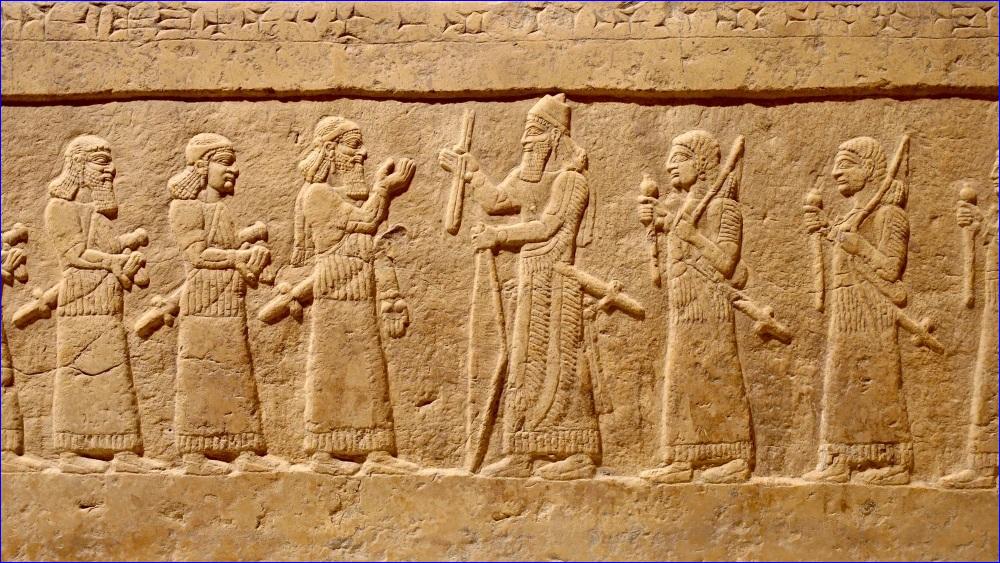
In Iraq, this approach not only has led to a fragmented security environment but also has created a dynamic in which U.S. policy has accelerated the disappearance of the indigenous Assyrians from their homeland.
Correcting by helping the Assyrians establish a semi-autonomous region would both right a long-standing injustice and bolster U.S. strategic interests. The Assyrian presence in northern Iraq predates the establishment of modern Middle Eastern states. Assyrians have no expansionist goals and pose no threat to U.S. security interests, nor to any regional power. The proposed region is the Assyrian triangle--which includes the Nineveh Plain, the Duhok Governorate, and the Nerwa and Rekan area--covering approximately 4,600 square miles, roughly the size of Connecticut.
Before the demographic upheavals of the latter half of the twentieth century, records such as the 1957 Iraqi census indicate a clear Assyrian majority across this region. Subsequent demographic engineering, displacement, and administrative changes altered that composition but did not erase the historical and communal ties to the land.
From a strategic standpoint, supporting an Assyrian region would bring justice and could offer Washington a far more dependable partner in Iraq's fragmented political environment. Necessity, rather than shared values, has shaped past U.S. partnerships in Iraq. For example, cooperation with certain Popular Mobilization Forces factions during the anti-Islamic State campaign indirectly strengthened groups with close ties to Iran, some of which the United States now implicates in attacks on U.S. personnel and interests. Similarly, tensions with Kurdish authorities--particularly following the 2017 independence referendum and subsequent disputes over territories such as Kirkuk and the Nineveh Plain--demonstrate that even relatively stable partners may pursue unilateral policies that complicate U.S. strategy.
Today, Assyrians are dispersed around the world, but with appropriate support, returning to their homeland becomes viable--as demonstrated by the modern Jewish return to a historic homeland. Given the opportunity, they can govern their own affairs while remaining aligned with U.S. interests. This is an existential issue for Assyrians; Iraq has failed to guarantee their security.
Land grabs by the Kurdish militias since the 1960s, which continue today under the Kurdistan Regional Government, demographic shifts of the early 1970s and 1980s, and the various atrocities in the post-2003 Iraqi order have steadily eroded the Assyrian presence in Iraq. Assyrians cannot depend on the good grace of a stronger local power, with its own nationalist agenda, to act with impunity.
Skeptics may question whether such a region is viable. Challenges related to economic sustainability, security, territorial disputes, and political cohesion are real. However, these obstacles are not unique; the same concerns accompanied the development of the Kurdish-controlled region, which eventually became an inseparable part of Iraq's political system. With sufficient international support, a clearly defined administrative process, and a structured approach to disputed areas, an Assyrian region could achieve a comparable or even more successful outcome.
For U.S. policymakers, the more important question is not whether this arrangement fits neatly within the framework of the Iraqi constitution or poses administrative challenges, but whether Washington is willing to take the steps to deliver the long-overdue justice and advance its long-term strategic interests. Historically, U.S. foreign policy has not bound itself to domestic constitutions or international consensus when U.S. interests are at stake, as evidenced by the NATO intervention in Kosovo--carried out without explicit authorization from the United Nations Security Council--the 2003 invasion of Iraq, and most recently the removal of the former Venezuelan president, Nicolás Maduro. Washington has shown both the ability and willingness to shape political realities on the ground when it deems it necessary.
Therefore, it is no longer a question of possibility but of whether Washington is willing to correct a course it helped shape and to invest in a natural and dependable partner that has long been subjected to Islamization and Kurdification policies. In Washington, many politicians and diplomats talk about the Christians of the Middle East. Talk is cheap, however. When it comes to the Assyrians, the choice is stark: Support them or witness the decimation of one of the oldest Christian communities in the region.
or register to post a comment.