


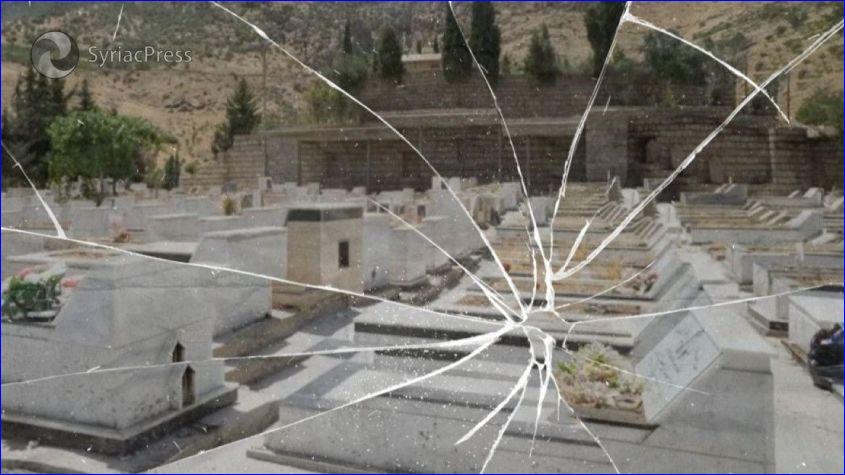
Less than two weeks after the desecration and destruction of a Chaldean cemetery in the town of Armota, in the Koy Sanjaq (Koya) district on 6 December 2025, another incident has occurred. In the Armota case, the perpetrators were neither arrested nor seriously pursued by authorities, despite official pledges made under the banner of peaceful coexistence and communal harmony.
This time, the town of Shaqlawa, which has a Assyrian majority, was targeted. Approximately 40 graves in the town's cemetery were smashed open, vandalized, and desecrated.
The repeated attacks point to troubling possibilities. Either the authorities are failing in their duty to protect sacred sites, or there are deliberate efforts to intimidate Christians and alter the area's demographic composition. In any state that claims even basic adherence to democratic norms, pluralism, and human rights, the Armota attack alone would have been sufficient to prompt heightened security measures around cemeteries and other holy sites. At a minimum, it would have triggered accountability at the highest levels.
Instead, authorities in the Kurdistan Region imposed a media blackout, barring outlets from covering the circumstances or consequences of the crime. Several sources said the move was intended to prevent the incident from becoming a matter of public opinion, which would puncture the image of human rights and democracy that the regional government promotes.
Other sources attributed the blackout to the horrific nature of the scene and to respect for grieving families. Some of the desecrated graves reportedly belonged to people who had died only recently, and whose bodies were allegedly subjected to abuse.
Joseph Sliwa, head of the Beth Nahrain Patriotic Union (Huyodo d'Bethnahrin Athroyo, HBA), said in a Facebook post that the ban on filming was imposed to prevent images of the vandalized graves from circulating. This, he argued, would make it easier for priests and bishops affiliated with the authorities to deny the incident, ensuring it did not gain public or media traction. Such exposure, he wrote, would have harmed the carefully curated reputation that authorities in Arba?ilo (Erbil) market internationally.
Sliwa added that a second explanation, which he described as unconfirmed, was that the bodies of the recently deceased had been removed from their graves, abused, and left exposed.
He further noted that these events formed part of a pattern. Within less than two weeks, Christian graves were vandalized in Armota, a church was attacked in Nohadra (Duhok), and cemeteries were desecrated in Shaqlawa. He pointed out that similar incidents recur year after year, yet not a single perpetrator has been publicly tried or punished, a failure he said undermines any claim of equality or justice.
Concluding in a sharply sarcastic tone, Sliwa remarked that he could not understand why the world had failed to benefit from the region's supposed model of security and coexistence, describing it instead as an experience of chaos and illusion rather than genuine peace.
or register to post a comment.