


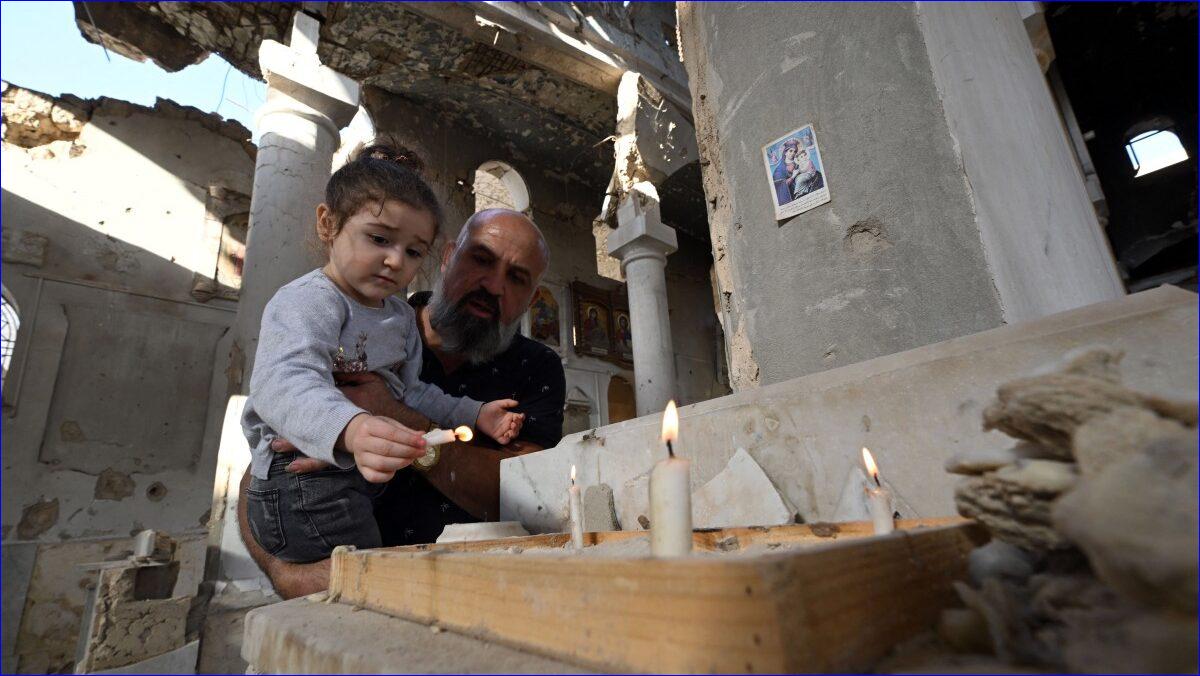
The persecution of Christians is a global crisis, from Nigeria to Syria, but unfortunately it does not seem to receive the attention it deserves from governments and the media. What do you think is the reason for this?
Because much of what is said is just that--words. In practice, economic deals, energy projects, military agreements, and strategic partnerships carry far more weight than human rights. And the rights of minorities are always the first to be sacrificed. There is also a fear among Western powers of speaking openly about religiously motivated extremism. They do not want to 'offend' partners they need for economic or geopolitical interests.
And let me state an uncomfortable truth: Many conservative parties in the West claim to defend Christians in the Middle East--while simultaneously seeking political partners among hardline, sometimes almost jihadist, Muslim groups. This happens because they apply a European left--right ideology to the Middle East. It is a fundamental misunderstanding of the region. In the Middle East, the actors they perceive as 'conservative allies' are often the very forces persecuting Christians, Assyrians, Yazidis, and others. So instead of protecting us, they legitimize those who threaten our existence. It is a dangerous naïveté. And let me add this, because it matters: If Europe continues on this path, European Christians will soon face the same threats. Not necessarily through violence--but through the slow erosion of democratic values, freedoms, and pluralism. When you support forces that destroy democracy abroad, those forces ultimately influence democracy at home.
What is the situation of Christians in the Middle East and in Syria in particular?
We are witnessing a historic collapse of our communities. Threats, hatred, and persecution happen openly--while the authorities that should protect their citizens turn a blind eye or invent excuses. Cities like Qamishli, Hassake, Homs, and Aleppo--where Christians have lived for over 2,000 years--are being emptied. The threats come from several directions: jihadist groups such as ISIS, repressive regimes, and Turkish military operations and demographic engineering. At the same time, many external actors claim to 'protect' us--but their actions undermine the very possibility of staying in our homeland.
In northeastern Syria, together with other minorities, we have built schools, security forces, local administrations, and education in our own languages. Even there, the great powers treat our survival as a bargaining chip.
You compare the policy of persecution against Christians with that perpetrated by the Ottoman Empire.
Yes, not because the events are identical--but because the logic is the same. The methods have changed, but the intention and the outcome are familiar: we are killed, pushed out, silenced, and over time made fewer.
I reject the term 'minority.' We are not a minority--we are the indigenous people of this region. But yes, in numbers, we have become fewer in our historical homelands. Seyfo 1915 [the Assyrian genocide perpetrated during World War I, primarily between 1915 and 1920, within the Ottoman Empire] was an attempt to erase the Suryoye, but today the strategy is done with confiscations, militias, forced displacement, and systematic pressure. And all this happens in a world that claims to defend human rights--yet principles collapse the moment they collide with interest.
Your own family carries this history. Why is it important to pass it on?
Because otherwise we disappear. Almost every Suryoye family carries memories of persecution--from Seyfo 1915, from Tur Abdin, from Mosul, from Homs, from Aleppo, from Khabur. These stories are not just family tragedies--they are political testimonies.
My grandmother, Sikke, told me how her two brothers--17 and 19--were slaughtered. Their bodies were identified only by their severed heads. She told my siblings, and she told me when I was five years old. We are hundreds of thousands carrying these stories. This is not 'collateral damage.' It is the result of political decisions--regional and international.
When Donald Trump or European leaders receive Ahmed al-Sharaa, the Syrian president who previously had a $10 million bounty on his head, what does that mean for Christians in the region?
It depends entirely on whether symbolism is followed by demands and conditions. Handshakes and photo opportunities mean nothing without religious freedom, protection of minorities, rule of law, and real security guarantees. Otherwise, we are used as decorative symbols while others decide our fate.
Our questions remain: Will this improve our security? Will we have real influence over our future? Will our children preserve their language, culture, and history?
Many follow the logic of 'the enemy of my enemy is my friend.' Is this way of thinking the great mistake of the West?
Yes, because it is a formula for disaster. Western parties look for 'partners' in the Middle East. But due to their own ideological blindness, they end up empowering fundamentalists, forces hostile to women's rights, groups aligned with jihadist ideologies, or even actors actively persecuting Christians and Yazidis. This has already cost countless lives.
And again--this has consequences for Europe itself: When Europe empowers anti-democratic actors abroad, the result is the weakening of democratic values at home. The crisis will not remain 'far away.' History teaches us that it always returns.
What must the West do differently to truly help Christians in the Middle East?
First: stop lying--to themselves and to us. One cannot say "we protect Christians" while supporting those who persecute us. And about concrete actions, we need internationally guaranteed security zones for minorities, support for local security forces that genuinely protect civilians, the recognition of Seyfo 1915--because historical justice is necessary for future stability--investment in reconstruction of Christian and minority areas, a complete halt to funding extremist groups, even when they are called partners, and a demand for secular law and real pluralism in every diplomatic agreement.
And critically, it is fundamental to stop applying Western political categories to the Middle East and build alliances with actors who defend democracy--not those who destroy it. Because--and this is vital--if democracy collapses in the Middle East, it will collapse in Europe as well. The fate of Christians in the Middle East and the fate of Christians in Europe are not separate. They are deeply connected. If the world truly intends to protect the Christians of the Middle East, then it must act based on principles--not economic interests. Otherwise, our communities will be sacrificed again. And Europe should know, what happens to us today can happen to them tomorrow if democratic forces are not strengthened now.
or register to post a comment.