


 DeAgostini/Getty Images)
The empire is one of the oldest known civilizations on the planet. Founded sometime during 14th century B.C.E., it grew out of a city-state located in what is now Iraq. At its peak, its territory spanned from Egypt's Nile River Delta all the way to the Persian Gulf. It collapsed during the 7th century B.C.E., when its longtime rivals, the Babylonians and Medes, conquered its capital city of Nineveh.
As its name suggests, the library was created by Ashurbanipal, who ruled from 669 until his death in 631 B.C.E. Unlike other Assyrian kings, Ashurbanipal preferred scholarship to warmongering. Carvings made during his reign seldom depict him without his stylus, and many of the tablets in his collection--which is thought to have been stored inside his palace in Nineveh--bear his personal royal stamp.
The Library of Ashurbanipal was to the ancient Greeks and Romans what the Library of Alexandria is to us today: a lost archive of unparalleled, almost mythical proportions. Ashurbanipal collected texts on every subject, from astronomy to medicine. Since the library's initial discovery in the 19th century, archaeologists have uncovered dictionaries, historical treatises, and prayers, to name just a few examples. Also included in the ruler's collection was a translation of the epic of Gilgamesh, the legendary Sumerian king who slays monsters and searches in vain for immortality.
Many of these texts have survived not in spite but precisely because of the library's eventual destruction. When the Medes and Babylonians invaded Nineveh, they wasted no time setting fire to the city and by extension, the library. While their torches reduced the collections of parchment and papyrus to ash, the tablets emerged unscathed. The fire effectively gave them a second bake, hardening them to the point that they were able to survive even the collapse of the building itself.
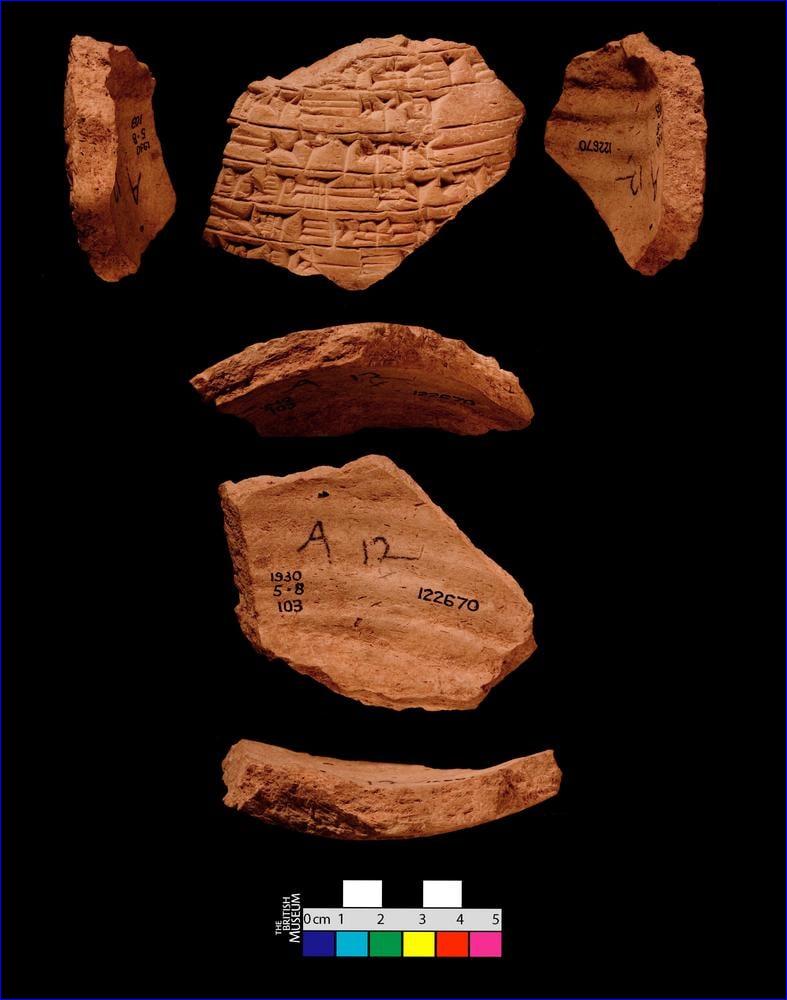 The Trustees of the British Museum)
Ironically, while the Library of Ashurbanipal has revolutionized our understanding of the Assyrian Empire, we still don't know all that much about the site itself. Excavations in and around Nineveh, located near the modern-day city of Mosul, were placed on hold after large parts of Iraq were taken over by ISIS in 2014. While efforts resumed after ISIS was driven out of the country in 2017, the region's enduring geopolitical instability leaves the fate of ongoing and future research endeavors uncertain.
For the moment, though, the field of Assyriology is forging ahead. Earlier this year, archaeologists working in Nineveh uncovered several cuneiform tablets bearing inscriptions from Ashurbanipal and other rulers. These were accompanied by artifacts from Syria that likely ended up in Assyria as the result of a successful military campaign, as well as a 20-foot-tall statue of a winged bull with a human head--a widely used piece of Assyrian imagery, and the largest discovered so far.
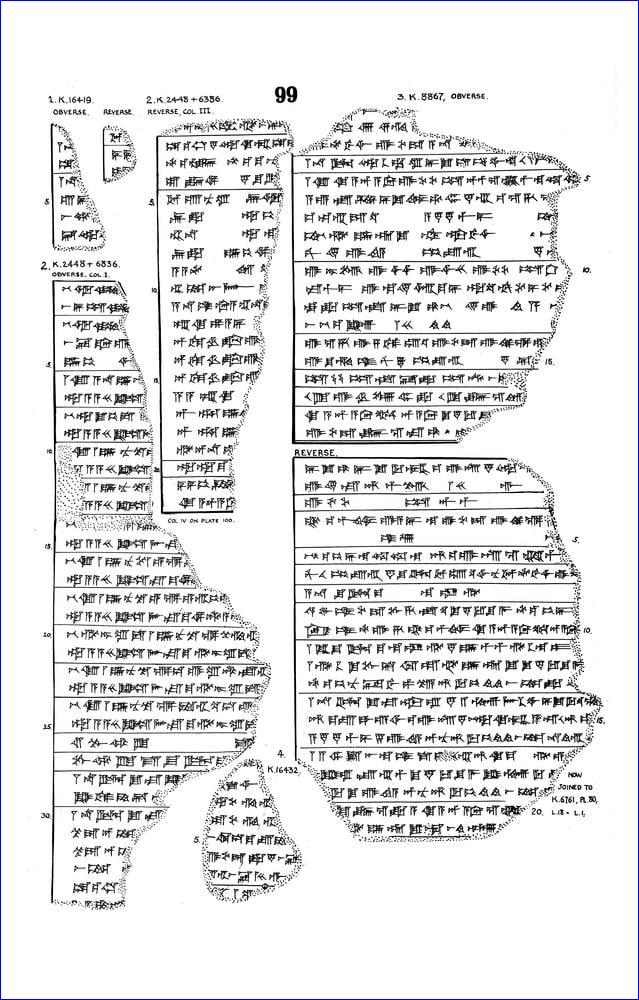 The Trustees of the British Museum)
Meanwhile, back at the British Museum, Middle East curator Jon Taylor has replaced philologist and minor internet celebrity Irving Finkel as head of the Ashurbanipal Library Project, which aims to study, preserve, and digitize the library's contents. As of 2020, the project's collaborators are concentrating on medical texts. At the same time, they are scanning tablets for information that may be able to shed more light on how and why the library came to be.
or register to post a comment.