


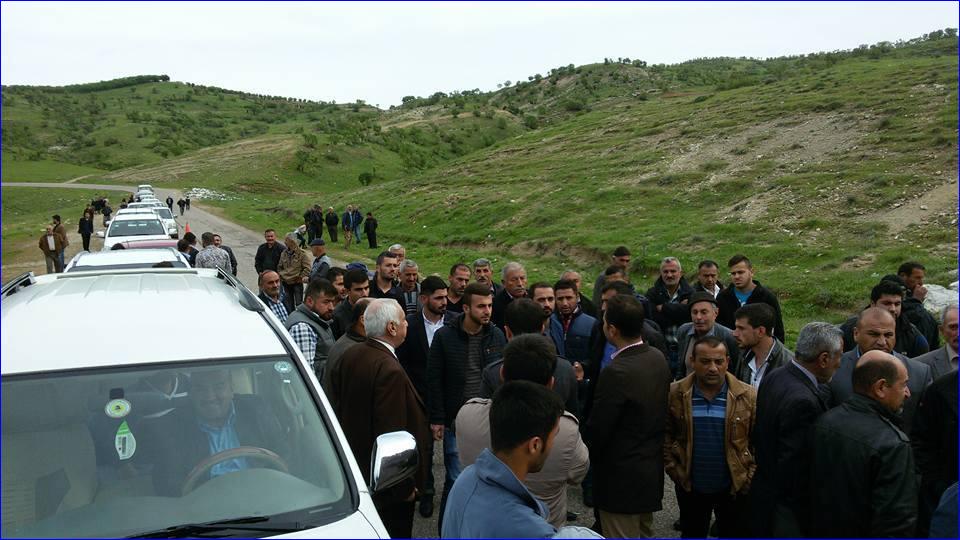
On July 6, 2026, in Nohadra (Dohuk), and again on August 5, 2026, in Tel Keppe, Assyrians sought to peacefully express their concerns regarding their rights and future in their homeland. Reports indicate that Assyrian participants faced obstacles, intimidation, and pressure at checkpoints controlled by Kurds security forces, raising serious concerns regarding freedom of movement and the right to peaceful assembly.
Related: Kurdish Confiscation of Assyrian Lands in North Iraq
The demonstration in Tel Keppe was specifically organized to bring attention to concerns over the distribution of Assyrian lands by government authorities to other Iraqi citizens. For many Assyrians, land is not simply property; it represents their ancestral connection, cultural survival, and the continuation of an indigenous presence that has existed in Assria "Mesopotamia" for thousands of years. Decisions affecting Assyrian lands without meaningful consultation with the affected communities deepen feelings of displacement and insecurity.
The Assyrian people are one of the indigenous peoples of Mesopotamia, with a continuous historical connection to their ancestral lands. Yet, many Assyrians today feel increasingly marginalized, displaced, and threatened as land disputes, demographic changes, and political pressures continue across the Nineveh Plain, Dohuk, Northern Iraq and other Assyrian regions. The loss of villages, disputed land ownership, and the continued migration of Assyrians from their homeland represent a serious cultural and humanitarian concern.
The international community often speaks about peace, democracy, and human rights in Iraq. However, these principles must apply equally to all communities, including the Assyrians, who have endured persecution, massacres, displacement, and decades of neglect. True stability cannot be achieved by restricting peaceful voices or ignoring the legitimate concerns of indigenous communities.
The United States and Israel maintain significant relationships and influence in the region. With that influence comes a responsibility to ensure that policies and partnerships support human rights, justice, and the protection of vulnerable indigenous communities. Policymakers must carefully examine the realities faced by Assyrians and support meaningful protections for their lands, identity, culture, and political representation.
Many Assyrians also express concern that some religious and political representatives who claim to speak on behalf of the community do not always reflect the true concerns of ordinary Assyrians. The future of a nation cannot be secured when authentic voices are weakened, restricted, or replaced by individuals who prioritize political interests over the rights and aspirations of their own people.
The time has come for international leaders, including policymakers in the United States and Israel, to recognize the urgent challenges facing the Assyrian people. Protecting indigenous rights is not about favoring one community over another; it is about defending the principles of justice, equality, and human dignity.
The Assyrian people are not asking for privilege. They are asking for the same freedoms promised to all people: the freedom to live safely in their ancestral homeland, to speak openly, to preserve their identity, to protect their lands, and to participate peacefully in decisions that affect their future.
The survival of an ancient indigenous people should not depend on silence. It should depend on justice, accountability, and the commitment of the international community to protect human dignity wherever it is threatened.
Guest Editorial Policy
or register to post a comment.